
How to Stop Doomscrolling: A 14-Day Reset Plan
Why doomscrolling is so hard to stop, and a 14-day plan to break the habit: notifications, app friction, a phone-free bedroom and a healthier news diet.

A family tech agreement template covering screen-free times and zones, bedtime charging, online safety and consequences, with tips for agreeing it together.
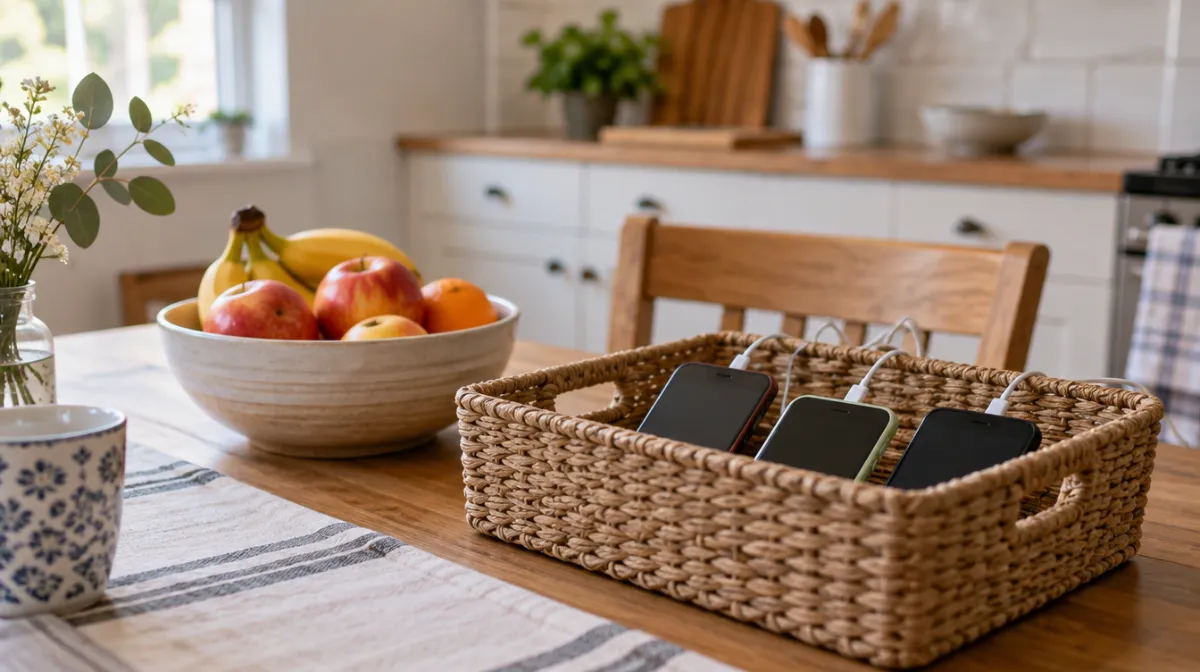
A family tech agreement turns endless arguments about screens into a set of rules everyone has agreed to in advance. The American Academy of Pediatrics recommends families make a media plan together, and the process of writing it matters as much as the rules themselves.
Copy these sections, fill in your own details and put the finished agreement somewhere visible, such as on the fridge.
We’ll look at this agreement again on …
| Age | Focus of the agreement |
|---|---|
| Under 5 | Watching together, short sessions, no screens at meals or bedtime |
| 6–9 | Clear daily limits, approved apps and games, asking before downloading |
| 10–12 | First phone rules, messaging, privacy settings and online kindness |
| Teens | Self-management, sleep, no phones while driving and more say in the rules |
For suggested daily limits at each stage, BratChild’s screen time guide by age is a good starting point.
As soon as children start using screens regularly. Simple rules work for young children, and the agreement can grow with them.
Negotiate. Teens respond better when they have real input, so let them propose rules and explain their reasoning, while keeping non-negotiables such as safety and sleep.
It can help. Our phone habits self-check is designed for adults and is a useful, private way to model the reflection you’re asking of your children.
Every article is edited by a human and checked against our editorial policy. Spotted a mistake? Tell us.
Why doomscrolling is so hard to stop, and a 14-day plan to break the habit: notifications, app friction, a phone-free bedroom and a healthier news diet.
A realistic 30-day social media detox: what to prepare, a week-by-week plan, how to handle cravings and FOMO, and how to rebuild a healthier routine after.
Why a phone-free bedroom helps sleep and focus, what to use instead for alarms and emergencies, and a simple one-week plan to make the change stick.