Am I Addicted to My Phone? A 12-Question Self-Check
A private, 12-question self-check to see whether your phone use has become a problem, what your score means and practical next steps for each result.

What gaming disorder is under the WHO’s ICD-11, the signs that gaming has become a problem, how it differs from a passion for games, and where to find support.
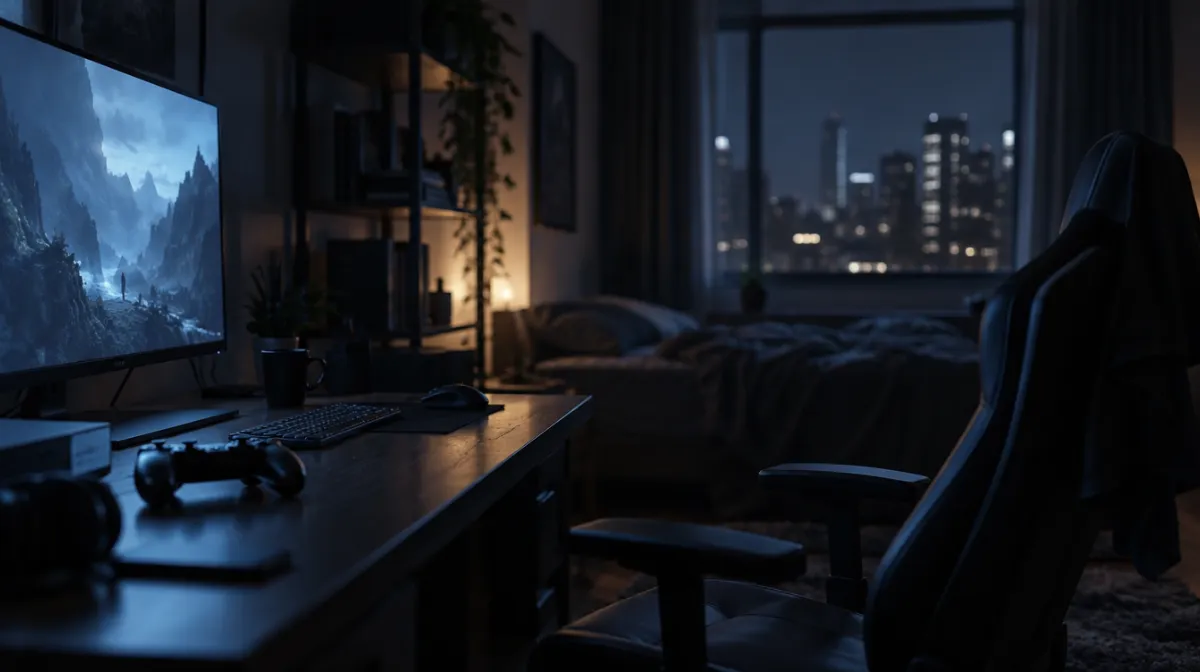
Gaming disorder is a recognised health condition, not just a label for someone who plays a lot. The World Health Organization (WHO) includes it in the International Classification of Diseases (ICD-11), which came into effect in 2022. It describes a pattern of gaming where a person has impaired control over it, gives it increasing priority over other interests and daily activities, and carries on or escalates despite negative consequences. The WHO stresses that it affects only a small proportion of people who play games. Here’s how to tell the difference between enthusiasm and a problem, and where to find help.
In ICD-11, gaming disorder (code 6C51) is characterised by:
For a diagnosis, the pattern must be severe enough to cause significant impairment in personal, family, social, educational, work or other important areas of life, and it would normally be evident for at least 12 months. A shorter period can apply if all the features are present and symptoms are severe. ICD-11 also describes hazardous gaming: a pattern that increases the risk of harm without meeting the threshold for a disorder.
| A healthy passion | Possible warning sign |
|---|---|
| You play a lot but can stop when you need to | You regularly play far longer than planned and can’t cut back |
| Gaming fits around sleep, school, work and people | Gaming pushes out sleep, meals, study, work or relationships |
| You enjoy other hobbies and friendships too | Other interests fade and friends outside games drift away |
| Losing or taking a break is disappointing but fine | You feel intensely irritable, anxious or low when you can’t play |
| Spending is planned and affordable | Spending on in-game items is secret, growing or causing debt |
| Family can talk about gaming without big conflict | Gaming causes constant arguments, lies or hiding play |
One or two of these on their own don’t mean a disorder. What matters is a lasting pattern that causes real harm.
Some people who struggle with gaming also experience anxiety, depression or attention difficulties, and it isn’t always clear which came first. That’s one reason a professional assessment helps.
Ask yourself, honestly, over the past year:
If you answer yes to several, it’s worth talking to someone. Our phone addiction self-check uses a similar approach for smartphones.
If gaming problems come with thoughts of self-harm or suicide, seek help urgently: in the UK, call 999 or Samaritans on 116 123; in the US, call or text 988.
Yes. The WHO includes gaming disorder in ICD-11, which came into effect in 2022. In the American DSM-5, internet gaming disorder is listed as a condition needing further research.
There’s no set number. Gaming disorder is defined by loss of control and harm to daily life, not by hours alone.
Yes. Support usually involves talking therapy, practical changes to routines and devices, and help for any related issues such as anxiety or low mood.
Every article is edited by a human and checked against our editorial policy. Spotted a mistake? Tell us.
A private, 12-question self-check to see whether your phone use has become a problem, what your score means and practical next steps for each result.
Signs social media is harming a teenager, from lost sleep and mood changes to cyberbullying and sextortion, with practical steps and where to get help.
There’s no official screen time limit for adults. Here’s what health guidelines suggest, the signs screens are crowding out your life, and how to rebalance.