Am I Addicted to My Phone? A 12-Question Self-Check
A private, 12-question self-check to see whether your phone use has become a problem, what your score means and practical next steps for each result.

Signs social media is harming a teenager, from lost sleep and mood changes to cyberbullying and sextortion, with practical steps and where to get help.
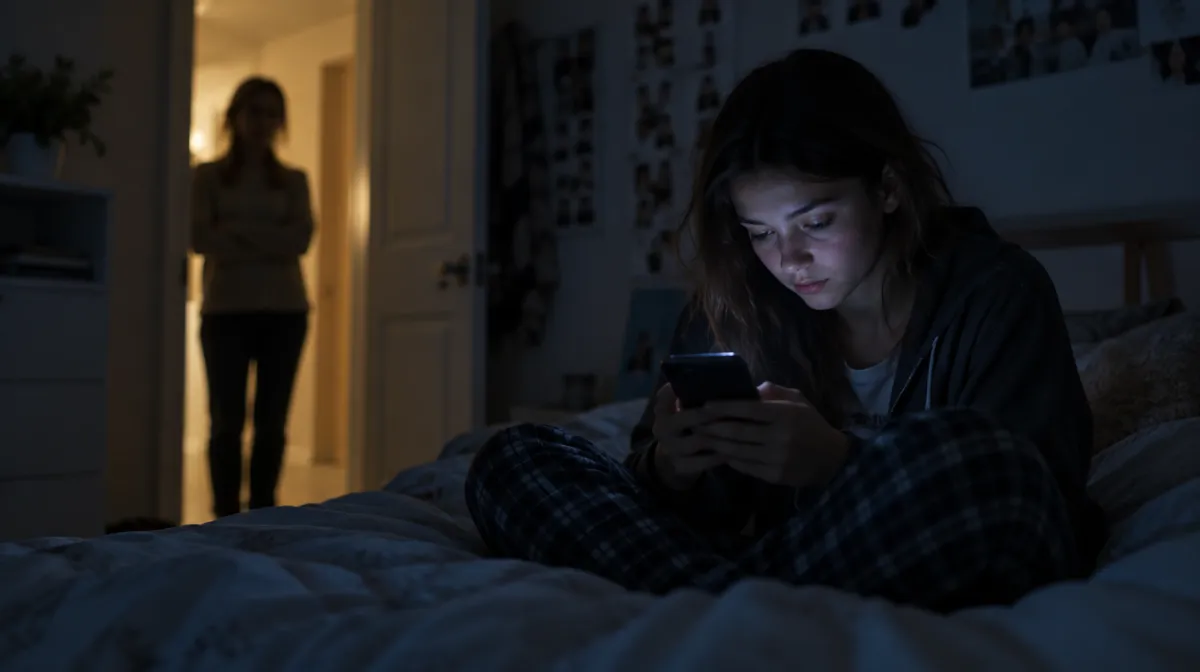
Social media is a big part of most teenagers’ lives, and much of it is positive: friendships, creativity, support and a sense of belonging. But for some teens, it chips away at sleep, mood and self-esteem, or exposes them to bullying and exploitation. The most useful signals for parents aren’t hours on a screen alone, but changes: sleeping less, seeming low after scrolling, pulling away from people and activities, or becoming secretive and distressed about their phone.
In 2023, the US Surgeon General issued an advisory on social media and youth mental health. It concluded that there isn’t enough evidence to say social media is sufficiently safe for children and adolescents, and highlighted research finding that adolescents who spend more than three hours a day on social media face double the risk of poor mental health outcomes, such as symptoms of depression and anxiety. The same year, the American Psychological Association advised that use should be monitored and adjusted to a teen’s maturity, and that it shouldn’t interfere with sleep or physical activity.
The research is still developing, and effects vary a lot between young people. Some benefit from online communities, particularly those who feel isolated offline. That’s why paying attention to your own child matters more than any single rule.
| Area | Possible warning signs |
|---|---|
| Sleep | Using the phone late at night, tired in the mornings, falling asleep in class |
| Mood | Seeming low, anxious or irritable after being online; big mood swings linked to notifications |
| Self-image | Comparing their looks to others, new worries about weight or appearance, changes in eating |
| Friendships | Withdrawing from offline friends and family, or seeming isolated despite being online a lot |
| Behaviour | Losing interest in hobbies, falling grades, skipping activities |
| Secrecy | Hiding the screen, deleting messages, new accounts you don’t know about |
| Distress | Panic or anger when the phone is taken away or can’t connect |
Some changes point to specific online harms:
Sextortion can escalate quickly. Make sure your teen knows they won’t be in trouble for telling you, and that help is available to remove images. Our sister site’s online safety checklist for parents explains the steps to take.
Governments are tightening protections. In the UK, Ofcom’s children’s safety codes under the Online Safety Act took effect in 2025, requiring platforms to protect children from harmful content. In Australia, a minimum age of 16 for many social media accounts began in December 2025. Rules and features change often, so check the latest settings on each app your teen uses.
Contact your GP, family doctor or school counsellor if:
If a young person is at immediate risk, call emergency services. In the UK, young people can call Childline free on 0800 1111, and anyone can call Samaritans on 116 123. In the US, call or text 988 for the Suicide and Crisis Lifeline.
There’s no single safe number, but the US Surgeon General highlighted increased risks for teens using social media more than three hours a day. Watch for effects on sleep, mood and daily life.
Sudden bans can backfire and make teens less likely to tell you about problems. Agreed limits, phone-free bedrooms and ongoing conversation usually work better.
Being upset after going online, avoiding school or friends, secrecy about devices and reluctance to talk about online life can all be signs.

Every article is edited by a human and checked against our editorial policy. Spotted a mistake? Tell us.
A private, 12-question self-check to see whether your phone use has become a problem, what your score means and practical next steps for each result.
What gaming disorder is under the WHO’s ICD-11, the signs that gaming has become a problem, how it differs from a passion for games, and where to find support.
There’s no official screen time limit for adults. Here’s what health guidelines suggest, the signs screens are crowding out your life, and how to rebalance.